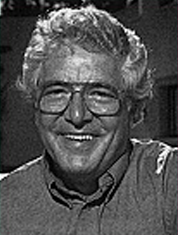
Allan Grapard, professor emeritus of Japanese religions at the University of California, Santa Barbara, where he was the inaugural holder of the International Shinto Foundation Chair in Shinto Studies, passed away on December 8 in his beloved Hawai‘i. He was among the most influential scholars of Japanese religious history over the last half century.
Born in Normandy in 1944, after his studies at the Institut national des langues et civilisations orientales (INALCO) in Paris, where he received his Ph.D., he spent many years doing research in Japan, before coming to the United States. Here he held appointments at the University of Colorado Boulder, at Cornell University, and at the East-West Center at the University of Hawai‘i at Mānoa before joining UC Santa Barbara in 1985.
Grapard was one of the leading promoters in the West of new approaches to Japanese religions and intellectual history, developed in Japan by Kuroda Toshio (1926–1991) and others, which revolutionized the way in which we now look at religious phenomena. He was also one of the first to focus on the cultural and intellectual history of Shinto beyond wartime ideology and stereotypes.
Grapard was steeped in the French philosophical and intellectual tradition, and at the same time felt a profound affinity for Japan, which he visited often for fieldwork and conferences. He especially loved the mountains of the Kyushu region. Fueled by his immense erudition, Grapard’s research on Japanese religious history followed two main lines of inquiry: Shinto-Buddhist interactions and sacred geography (with his long-standing interest in Shugendō mountain religion), with a special focus on the relations between ideas, doctrines, institutions, and practices in a variety of contexts. Grapard was also one the first scholars to highlight the crucial importance of policies in the Meiji period that essentially terminated premodern religious beliefs and practices and brought about a radical transformation of the religious field, with consequences that are still felt today.
Grapard was always attentive to critical theory, cultural analysis, and methodological issues; indeed, he can be considered one of the leaders of the “critical turn” in Japanese religious studies. After his retirement, he continued to share his knowledge with students and scholars around the world and to write and publish original research, in particular on mountain religions in Kyushu and on the role of food in Japanese religions. Many scholars today work along agendas that are based on Grapard’s trailblazing scholarship.
His major publications include La vérité finale des Trois Enseignements (Paris: Poesis, 1982), The Protocol of the Gods: A Study of the Kasuga Cult in Japanese History (Berkeley: University of California Press, 1992), and Mountain Mandalas: Shugendō in Kyushu (London: Bloomsbury, 2016), in addition to many impactful articles and book chapters.
Allan Grapard was an adventurous and rigorous intellectual, a witty conversationalist, and an inspiring teacher. He will be sorely missed by his former students and the global scholarly community at large.
In memoriam composed by Fabio Rambelli.